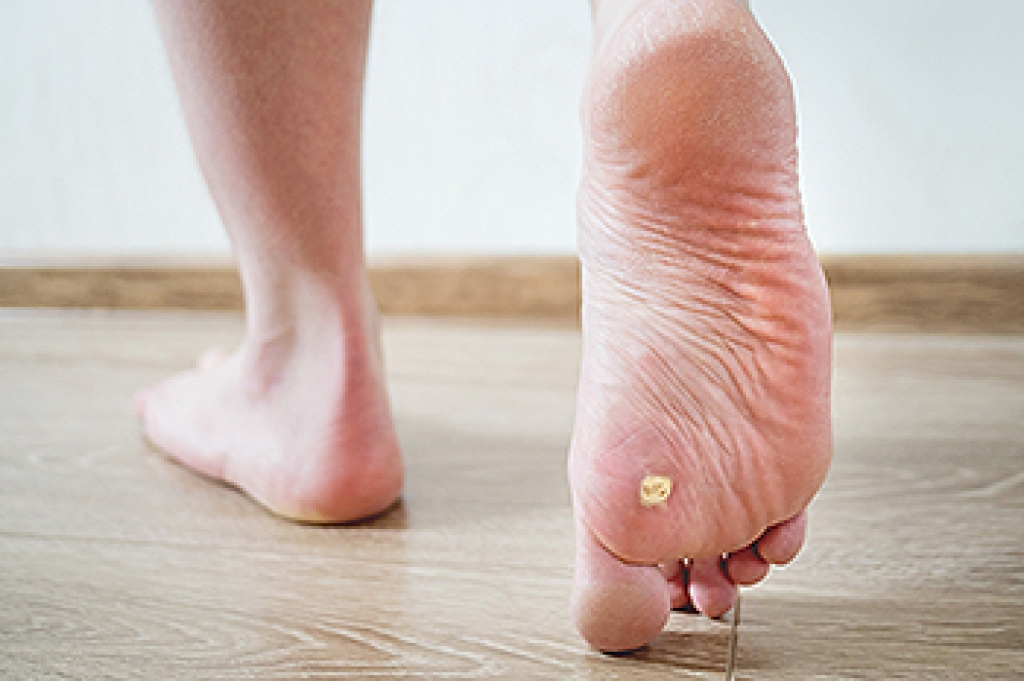
Plantar warts are a viral skin condition that affects the sole of the foot, often developing near the base of the toes or on weight-bearing areas. These growths are caused by the human papilloma virus, or HPV, which enters the skin through tiny cuts or abrasions. Unlike warts found on other parts of the body, plantar warts grow inward due to pressure from walking and standing. This inward growth can make them more painful and difficult to ignore during daily activity.
Symptoms of plantar warts typically include small, rough lesions on the bottom of the foot that may feel firm to the touch. A key sign is the presence of tiny black dots within the wart, which are small clotted blood vessels. Many individuals describe a sharp or stabbing pain when walking, especially when pressure is applied directly over the wart. The surrounding skin may become thickened, forming a callus like layer that can further increase discomfort.
Risk factors for developing plantar warts are often related to exposure and skin vulnerability. Walking barefoot in communal areas, such as locker rooms, pools, or gym showers, increases the chance of coming into contact with the virus. Children, teenagers, and individuals with a weakened immune system are more susceptible. Excessive sweating, poor foot hygiene, and repeated pressure on the same area of the foot can also contribute to wart formation and persistence.
The underlying cause of plantar warts is viral infection combined with conditions that allow the virus to thrive. Early identification and proper management can reduce pain and prevent spreading to other areas of the foot. Keeping feet clean, dry, and protected is essential for prevention. If you have symptoms of a plantar wart, it is suggested that you consult a podiatrist for effective relief and treatment solutions.
Plantar warts can be very uncomfortable. If you need your feet checked, contact one of our podiatrists from Podiatry Services . Our doctors will assist you with all of your foot and ankle needs.
About Plantar Warts
Plantar warts are the result of HPV, or human papillomavirus, getting into open wounds on the feet. They are mostly found on the heels or balls of the feet.
While plantar warts are generally harmless, those experiencing excessive pain or those suffering from diabetes or a compromised immune system require immediate medical care. Plantar warts are easily diagnosed, usually through scraping off a bit of rough skin or by getting a biopsy.
Symptoms
- Lesions on the bottom of your feet, usually rough and grainy
- Hard or thick callused spots
- Wart seeds, which are small clotted blood vessels that look like little black spots
- Pain, discomfort, or tenderness of your feet when walking or standing
Treatment
- Freezing
- Electric tool removal
- Laser Treatment
- Topical Creams (prescription only)
- Over-the-counter medications
To help prevent developing plantar warts, avoid walking barefoot over abrasive surfaces that can cause cuts or wounds for HPV to get into. Avoiding direct contact with other warts, as well as not picking or rubbing existing warts, can help prevent the further spread of plantar warts. However, if you think you have developed plantar warts, speak to your podiatrist. He or she can diagnose the warts on your feet and recommend the appropriate treatment options.
If you have any questions, please feel free to contact our office located in Murrieta, CA . We offer the newest diagnostic and treatment technologies for all your foot care needs.


